
.svg)
Consumer connection
What if every surfboard, kite, or wetsuit could do more than perform? What if it could also connect riders to a global community? North Actionsports Group, home to North Kiteboarding, Mystic, and North Windsurfing, to rethink how products engage customers.
With design roots in New Zealand and a reputation for pushing boundaries, North has always built gear that brings people to the water and to each other. As customer expectations rose and EU transparency regulations approached, the team saw an opportunity: make every product a trusted digital touchpoint.
From loyalty programs to living products
Static QR codes were a smart first move for Club North. They proved the concept and drove strong early engagement around warranties, events, and member-only perks. Over time, North saw the opportunity to build on what was already working and take it to the next level. By evolving from static, one-way touchpoints to Digital Product Passports, the brand can scale globally and keep the rider relationship active throughout the entire product lifecycle.
North is now equipping products with SGTIN-based QR codes and adopting the GS1 Digital Link standard years ahead of the 2027 transition, ensuring every scan remains future-proof as traditional barcodes phase out.
The goal was simple: turn product ownership into something that gets better over time, every session, every season, every scan.
Partnering with Tappr to Bring DPPs to Life
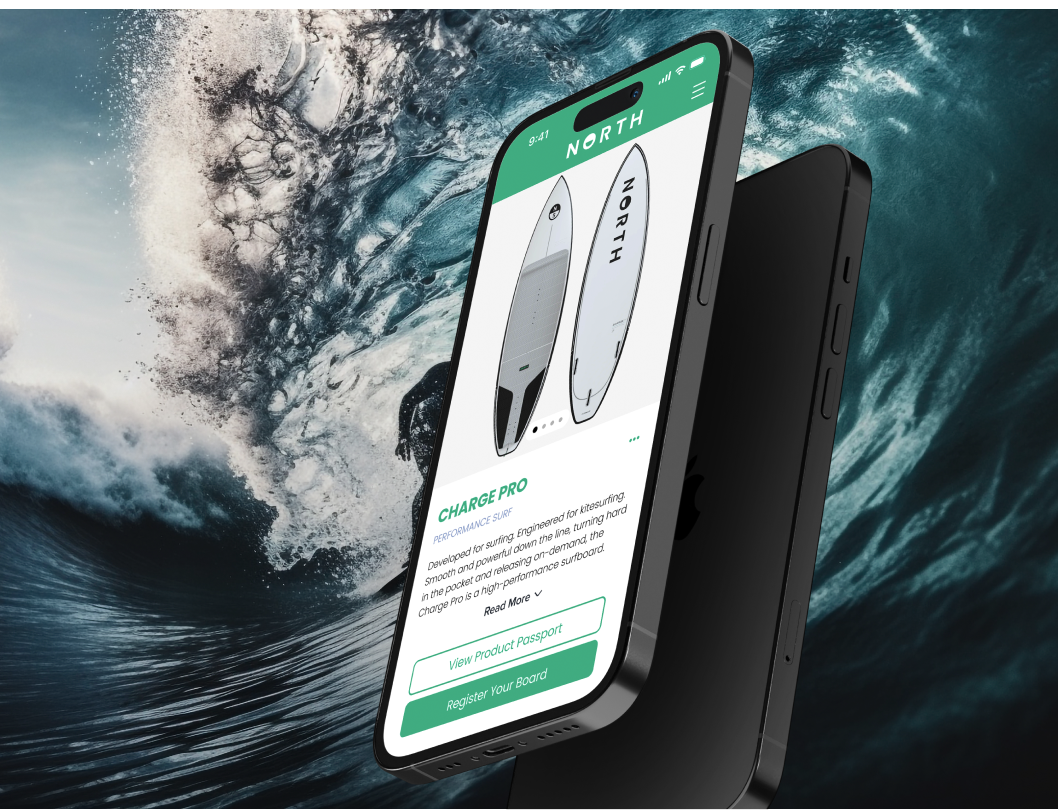
Tappr partnered with North’s New Zealand design team and global suppliers to embed DPPs directly into the 2025 lineup. Each sewn-in QR code gives riders instant access to:
- Club North Membership
Register products, unlock extended warranties, events, and member-only benefits. - Lost & Found + Theft Protection
Products link securely to owners, enabling fast recovery if gear is lost or stolen. - Centralized Product Information
Specs, care instructions, and manuals available in one place via a single scan.
Implementation spanned the globe, integrating smoothly with label suppliers and manufacturing partners.
Turning Products into Gateways for Engagement
The impact has been immediate. Registration rates increased sharply, transforming every product into a natural entry point for Club North. DPPs also strengthened webshop visibility and sales conversations, setting a new benchmark for connected watersports gear.
Beyond customer experience, North is now ahead of EU compliance requirements. Transparency and traceability are built into every item, reinforcing trust at scale.
A Future Where Every Product Connects
With Tappr’s Digital Product Passports, North is redefining what connection through products can look like. Each item now carries its own living story of performance, care, ownership, and community.
For riders, it’s more than gear. It’s a lasting link to the brand and a passport to shared experiences on the water.
.svg)
.svg)


.svg)
.png)

.svg)


